
OnlyFans subscription costs follow a predictable arc that most fans never see coming. Renewal behavior changes month by month, and the fan who understands that rhythm spends less than the one who reacts to each bank statement. This guide maps a full annual cycle of subscriber habits, from the exploratory first quarter through the year-end retention decision, so you can budget deliberately instead of canceling in a panic. BestOnlyFans tracks these patterns as part of its ranking methodology, and the trends are consistent enough to plan around.
Most subscribers treat each renewal as an isolated decision. In reality, renewal behavior clusters into four recognizable quarters, each with its own spending pressure and its own failure mode. Knowing which quarter you are in tells you what to expect from your own habits before they cost you money.
The Anatomy of a First-Quarter OnlyFans Subscription
New subscribers behave differently from settled ones. In months one through three, spending is driven by discovery rather than attachment, and the absence of any budget cap makes the total hard to predict. A fan who adds five pages in January rarely notices that the combined monthly charge has already passed what they intended to spend for the quarter.
Promotional pricing accelerates this. A first month at $3 is not a base price; it is an entry discount, and the renewal that follows can land anywhere between the $4.99 minimum and the $49.99 maximum. Subscribers who chase these offers across several pages build a renewal stack they did not plan for.
- Subscribing to multiple pages within the same week to compare them.
- Chasing discounted first months without checking the standard renewal price.
- Unlocking PPV messages before reading the full profile description.
- Using paid chat at $3-$5 per message during the first flush of enthusiasm.
- Ignoring the $0.10 card verification hold and mistaking it for a charge.
- Setting no monthly ceiling because “it is only a few dollars each.”
- Renewing pages out of curiosity rather than genuine repeat interest.
- Failing to note which renewals land on the same calendar date.
A useful first-quarter habit is writing down every renewal date and price the moment you subscribe. The card verification hold of $0.10, refunded within days, is harmless; a stack of forgotten auto-renewals is not.
Tip: before your second month on any page, check whether the renewal price matches the promotional price you originally paid. If it jumped, decide now rather than after the charge clears.
Mid-Year Consolidation: Where Subscribers Cut Pages
By the second quarter, the exploratory phase ends and budget reality arrives. This is where portfolio trimming happens, and it is usually triggered by a total that finally gets added up. The psychological shift is simple: fans stop asking whether a page is interesting and start asking whether it is worth another month.
Timing matters here. Trimming a few days before a renewal date avoids paying for a period you already decided to skip. Because raising a price stops auto-renew while existing access continues until the paid period ends, a creator’s price change can also force the decision for you.
- Prioritize for renewal: you opened the page at least weekly in the past month.
- Prioritize for renewal: the creator posts on a predictable schedule.
- Prioritize for renewal: you use the paid chat or PPV content regularly.
- Cancel during consolidation: you cannot recall the last post you viewed.
- Cancel during consolidation: the renewal price rose without added value.
- Cancel during consolidation: the page duplicates another you already keep.
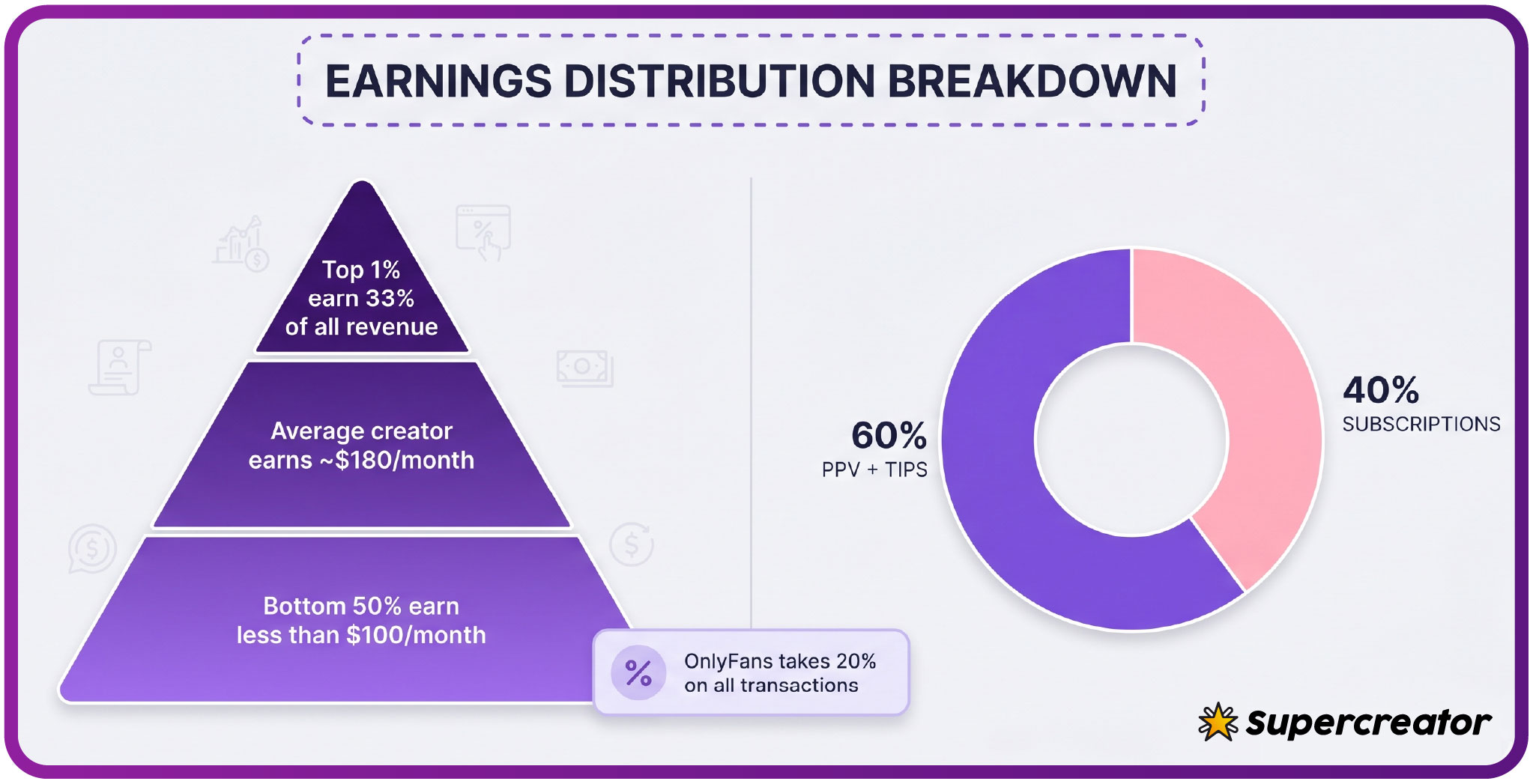
Consolidation is not failure. It is the mechanism that keeps an annual budget intact, because the platform takes 20% of everything spent while the creator keeps 80% — your money leaves regardless of whether the page still holds your attention. Cutting three weak renewals in May often funds the entire holiday season later.
Seasonal Spending Spikes and Their Budget Impact
Calendar events disrupt established rhythms. Creator promotional activity rises around holidays and platform milestones, and subscribers respond with one-off purchases that never appear in a monthly plan. Tips can reach $100, PPV unlocks go up to $50, and neither feels large in isolation.
The risk is not a single purchase; it is a spike layered on top of a renewal stack that was already at its limit. Fans who track only their subscription total miss the PPV and tip line entirely until the statement arrives.
- Late December: holiday promotions plus year-end generosity push tips upward.
- Valentine’s period: themed content drives PPV unlocks across many pages at once.
- Summer travel months: idle browsing time increases casual page additions.
- Creator anniversary or milestone events: limited offers reward fast decisions.
- Black Friday and New Year: discounted first months restart the exploration loop.
A preemptive tactic works better than restraint in the moment. Decide in advance what the seasonal allowance is, and treat the $4.99-$15 typical band as your benchmark for any new subscription added during a spike.
Fourth-Quarter Retention and Pre-Renewal Assessment
Year-end is when subscribers evaluate annual value rather than monthly novelty. Two behaviors dominate: renewing a small set of pages with real attachment, or mass-canceling before several renewal charges land in the same week.
Creator loyalty perks matter in this quarter. Long-run subscribers sometimes receive discounted renewal offers or bonus content, which changes the math on keeping a page versus replacing it. Take the perk into account before canceling a page you still use.
| Quarter | Typical Behavior | Budget Risk Level | Recommended Action |
|---|---|---|---|
| Q1 | Exploration, multiple trials, no caps | High | Log every renewal date and price |
| Q2 | Consolidation and portfolio trimming | Moderate | Cancel the weakest renewals early |
| Q3 | Seasonal spikes, promo-driven purchases | High | Set a fixed seasonal allowance |
| Q4 | Retention review, loyalty perks, mass cancel | Low to moderate | Assess value before renewals cluster |
Running the assessment two weeks before the heaviest renewal dates gives you room to act without losing access mid-period.
BestOnlyFans Data on Subscriber Longevity Patterns
Longevity metrics are a useful proxy for renewal probability. When a ranking card shows how long a page has kept subscribers, it reflects stability rather than novelty, and stable pages tend to survive the mid-year consolidation cut. BestOnlyFans uses those longevity signals in its ranking methodology precisely because they predict which pages fans keep paying for.
This matters because the platform has no built-in discovery feed or directory. Ranking sites exist to fill that gap, and the quality of their data shapes which pages get tried in Q1 and which get kept in Q2.
Matching Your Budget Review to Natural Cycle Points
Reviewing spending monthly is fine for catching errors, but it is too shallow to change behavior. Quarter boundaries are where the real decisions live, because they align with the phases subscribers actually pass through. A review scheduled at the wrong interval produces either panic or neglect.
| Review Timing | What to Evaluate | Decision Framework |
|---|---|---|
| Monthly | Total spend, unexpected charges, PPV and tip lines | Flag anomalies, no cancellations |
| Quarterly | Renewal list, page usage, price changes | Keep, pause, or cancel each page |
| Annual | Total year spend against target, seasonal pattern | Reset the budget and the page list |

Secure the account before reviewing the budget. Two-step authentication prevents the kind of access problem that turns a planned cancellation into a rushed one, and it keeps your payment history readable when you need it.
Breaking Reactive Cancellation Habits
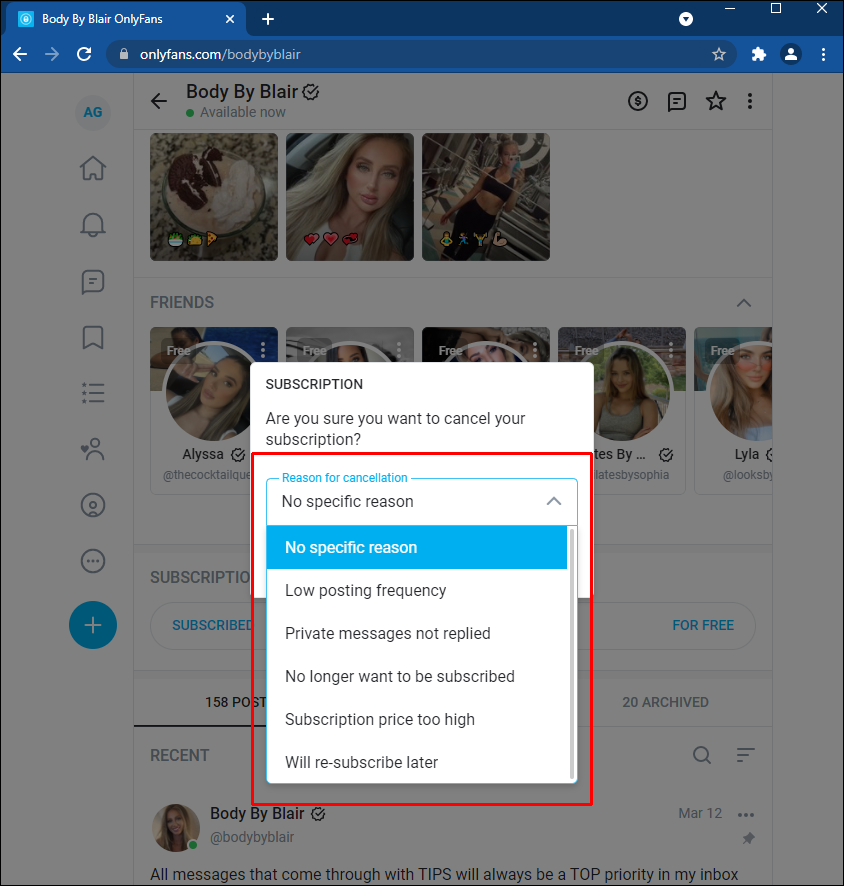
Canceling is the bluntest tool available, and it is often used in the wrong moment. Reacting to a single high statement by cutting everything removes pages you genuinely use, then reintroduces them weeks later at full price.
- Pause a subscription instead of canceling when the platform offers it.
- Downgrade to a lower tier where the creator provides tiered access.
- Stop PPV unlocks for one month while keeping the base subscription.
- Switch paid chat to a fixed number of messages per week.
- Keep the page but remove it from auto-renew pending reassessment.
- Replace two low-use subscriptions with one you actually follow.
- Move the renewal date to a cheaper part of the month if timing is the issue.
None of these require losing access, and each one is reversible. Reacting early and deliberately beats reacting late and completely.
Building an Annual OnlyFans Budget With Cycle Awareness
An annual budget works when it anticipates the cycle instead of pretending every month looks the same. The structure below treats exploration as a legitimate expense, sets aside room for seasonal variation, and builds in a contingency rather than an emergency.
- Phase one, months one to three: allow a wider exploration allowance for trial subscriptions and first-month discounts.
- Phase two, months four to six: cut the allowance, keep the strongest renewals, and redirect the difference to a seasonal fund.
- Phase three, months seven to nine: hold the reduced list and spend the seasonal fund only during promotional windows.
- Phase four, months ten to twelve: freeze new additions, assess each renewal on value, and reset the page list for January.
Set a hard annual ceiling and check it at each quarter boundary. If a month runs over, take the difference out of the next month rather than the contingency, which keeps the pattern intact.
Subscribers who plan at this level rarely need to mass-cancel, because the trimming already happened on schedule. For a practical comparison of pages worth keeping on a long-term list, see this overview of the best onlyfans streamer options and how their posting consistency holds up over a full year.
FAQ
Do most subscribers stay for a full year on any single page?
No. A single page rarely holds a subscriber for twelve straight months. Most fans keep a small core of pages long-term and cycle through others as interest fades, which is why retention is concentrated rather than spread evenly.
Why do cancellations cluster in specific months?
Because the triggers cluster. Promotional months add pages that were never going to last, and year-end months stack renewals on the same dates. When several charges land together, subscribers cut more than they otherwise would.
How can I avoid the mid-year budget crash?
Trim deliberately in the second quarter rather than waiting for a statement that forces the issue. If the renewal price rose without added value, the page is the first candidate, especially when the platform’s 20% fee means your money is spent either way.
Does annual commitment ever make sense for OnlyFans subscriptions?
Only when the page has already survived a full consolidation cycle and you use it consistently. Commitment is a decision to make after a year of evidence, not a way to lock in a promotional first-month rate.